In today’s data-driven digital landscape, ranking systems play a critical role in how users evaluate products, services, platforms, and performance. RubRanking is a modern term that reflects this growing need for structured comparison, measurable results, and transparent evaluation. Whether viewed as a platform, framework, or emerging brand concept, RubRanking represents the evolution of how rankings influence decision-making in the online world.
This article explores what RubRanking is, how it can be used, its potential applications, and why ranking-based systems continue to gain importance across industries.
What Is RubRanking?
RubRanking can be described as a ranking-focused concept or system designed to organize information based on predefined criteria such as quality, performance, popularity, trust, or user feedback. Unlike traditional ranking models that rely solely on numerical scores, RubRanking emphasizes balanced evaluation, combining data analysis with user-centric insights.
The name itself suggests refinement and comparison—“rub” implying evaluation through testing or interaction, and “ranking” indicating structured placement based on merit. This makes RubRanking adaptable to various sectors, from digital platforms to service reviews and competitive benchmarking.
The Purpose Behind RubRanking
The primary goal of RubRanking is to simplify complex choices. With countless options available online, users often struggle to determine which option best suits their needs. RubRanking addresses this challenge by:
-
Providing clear and logical comparisons
-
Reducing information overload
-
Enhancing trust through transparent criteria
-
Supporting faster, smarter decisions
By organizing data into meaningful rankings, RubRanking helps users focus on quality rather than quantity.
How RubRanking Works
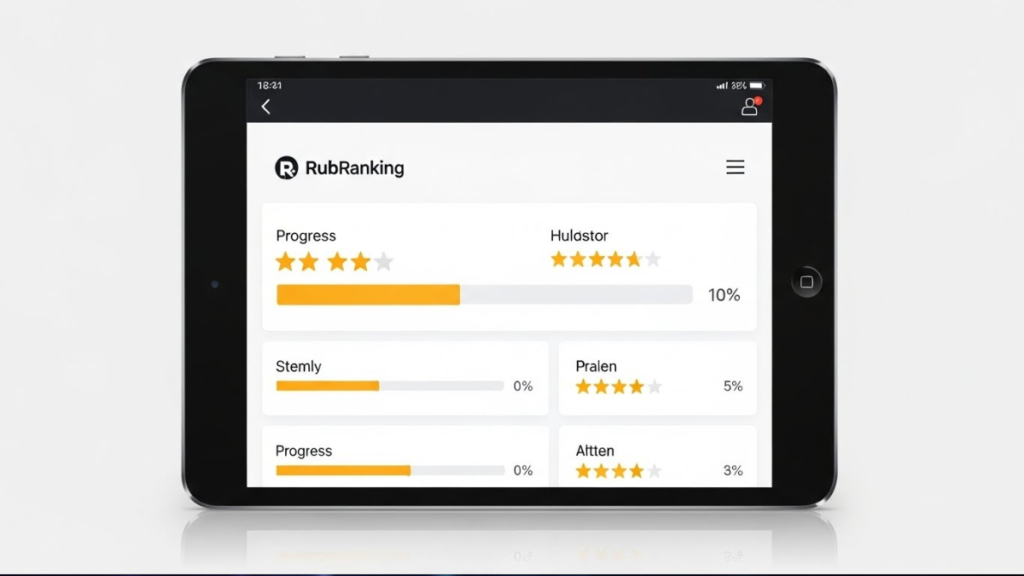
Although RubRanking can be implemented in different ways, most systems follow a similar structure:
1. Data Collection
Information is gathered from multiple sources such as user reviews, performance metrics, expert opinions, or analytics tools.
2. Evaluation Criteria
These may include reliability, usability, efficiency, popularity, or innovation.
3. Weight Distribution
Not all factors carry equal importance. RubRanking assigns weight to each criterion to ensure fair and relevant results.
4. Final Ranking Output
After analysis, items are ranked in an easy-to-understand format, often supported by summaries or insights.
This structured approach ensures that rankings remain objective and useful rather than misleading.
Key Applications of RubRanking
RubRanking is highly versatile and can be applied across multiple industries:
Digital Platforms and Websites
Many websites rely on ranking systems to display top tools, services, or resources. RubRanking can improve credibility by offering transparent and well-explained results.
E-Commerce and Product Comparison
Consumers often compare products before making a purchase. RubRanking can help highlight top-performing products based on real-world usage and feedback.
SEO and Online Visibility
Ranking frameworks influence search behavior. RubRankin-g-style systems can support SEO strategies by emphasizing relevance, authority, and user satisfaction.
Business and Performance Analysis
Companies can use RubRankin-g internally to evaluate departments, strategies, or KPIs, supporting data-driven growth.
Entertainment and Media
From movies to games and influencers, ranking systems help audiences discover trending and high-quality content.
Benefits of Using RubRanking
RubRankin-g offers several advantages that make it valuable in modern digital environments:
-
Clarity: Simplifies complex data into digestible results
-
Trust: Builds confidence through consistent evaluation standards
-
Efficiency: Saves time for users and decision-makers
-
Adaptability: Fits various industries and use cases
-
Scalability: Can evolve with growing data sets
These benefits make RubRankin-g especially relevant in competitive and information-heavy markets.
RubRanking as a Brand or Platform
Beyond being a ranking method, RubRankin-g has strong potential as a brand identity. Its abstract yet professional name allows it to represent innovation, accuracy, and fairness. As a brand, RubRankin-g could evolve into:
-
A review aggregation website
-
A SaaS-based ranking tool
-
A niche comparison platform
-
A data analytics and insights service
Its flexibility enables long-term growth without being restricted to a single industry.
Challenges and Ethical Considerations
While ranking systems are powerful, they must be used responsibly. RubRankin-g should prioritize:
-
Transparency in criteria
-
Avoidance of bias or manipulation
-
Clear disclosure of data sources
-
Respect for user privacy
Maintaining ethical standards ensures that rankings remain trustworthy and beneficial.
The Future of RubRanking
As artificial intelligence and big data continue to shape digital ecosystems, ranking systems will become even more sophisticated. RubRankin-g can evolve by integrating:
-
AI-driven analysis
-
Real-time data updates
-
Personalized ranking results
-
Predictive insights
These advancements can transform RubRankin-g into a next-generation evaluation framework.
Conclusion
RubRankin-g represents more than just a list or score—it reflects a structured approach to understanding value in a crowded digital world. By combining data, transparency, and user-focused evaluation, RubRankin-g helps individuals and businesses make informed decisions with confidence.
Whether adopted as a concept, system, or brand, RubRankin-g has the potential to become a trusted name in ranking-based solutions, offering clarity, credibility, and consistency in an ever-expanding online ecosystem.