
Getting behind the wheel for the first time is a significant milestone. It represents freedom, independence, and a new level of responsibility. While the prospect is exciting, it can also feel overwhelming. Understanding the fundamentals before you start the engine can build your confidence and set you on the path to becoming a safe, competent driver. This guide covers what every beginner should know as they start their journey on the road.
Getting Started: The Essential First Steps
Before you can even think about driving, there are a few preliminary requirements you need to handle. These steps ensure you are legally prepared to learn.
Understanding Your Local Requirements
Driving laws vary by location. The first thing you need to do is research the specific requirements in your area for obtaining a learner’s permit. This usually involves being a certain age, passing a written knowledge test, and clearing a vision screening. The written test will cover traffic laws, road signs, and safe driving practices, so studying the local driver’s handbook is essential.
Choosing the Right Instruction Method
How you learn to drive is just as important as what you learn. Many beginners start with a family member or trusted friend, which can be a great way to get comfortable in the car. However, professional instruction is invaluable for building a strong foundation. A certified driving instructor can provide structured lessons, teach defensive driving techniques, and correct bad habits before they form. Combining professional lessons with supervised practice is often the most effective approach. For those with busy schedules, an online driving school in Utah can offer a flexible way to complete the required classroom learning before getting behind the wheel.
Mastering the Basics Inside the Car
Once you have your permit, it’s time to get familiar with the vehicle itself. Don’t rush to start driving; spend your first session parked in a safe location, like an empty lot.
Know Your Vehicle’s Controls
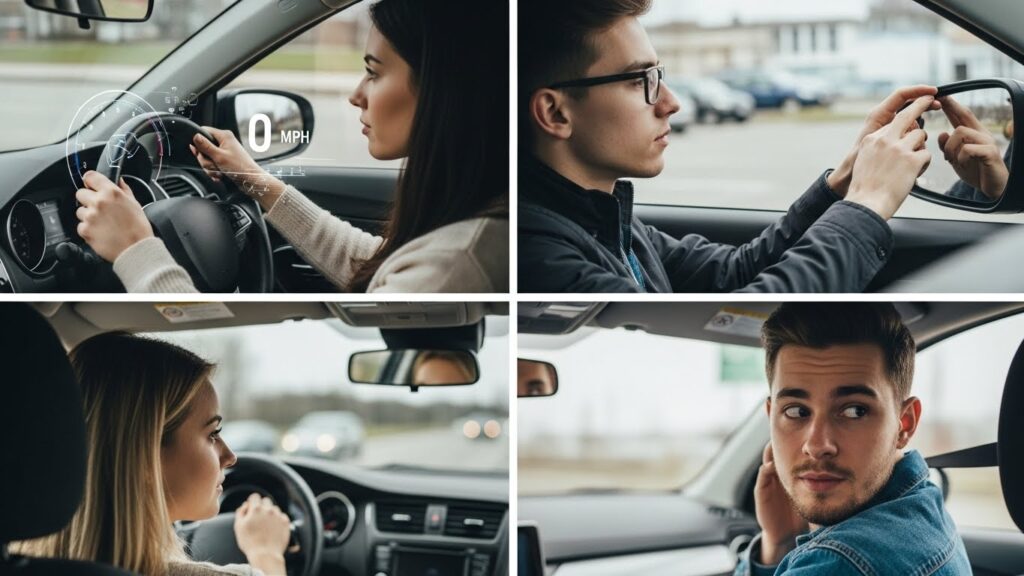
Take the time to understand the function of every button, lever, and pedal. Adjust your seat, mirrors, and steering wheel to a comfortable and safe position. You should be able to reach the pedals easily without straining.
- Mirrors: Adjust your rearview and side mirrors to minimize blind spots. The rearview mirror should frame the entire rear window, and the side mirrors should show a small sliver of your car’s side for reference.
- Pedals: In an automatic car, you have the accelerator on the right and the brake on the left. Always use your right foot for both to avoid confusion.
- Dashboard: Familiarize yourself with the dashboard symbols. Know what the check engine light, oil pressure warning, and battery light mean. Locate the speedometer, fuel gauge, and temperature gauge.
Your First Time on the Road
With the basics covered, you’re ready to start moving. Your first few driving sessions should be in a low-stress environment.
Starting Slow and Steady
An empty parking lot is the perfect place to practice fundamental skills. Focus on smooth acceleration and braking. Practice turning, get a feel for the car’s size, and work on steering control. Try navigating around parking spaces and other obstacles to understand how the car responds to your inputs.
Developing Good Habits Early
Safe driving is built on good habits. From your very first lesson, make these practices second nature:
- Always wear your seatbelt: Buckle up before you start the engine.
- Use your turn signals: Signal every turn and lane change, even if you think no one is around.
- Check your mirrors frequently: Constantly scan your rearview and side mirrors to maintain awareness of your surroundings.
- Keep a safe following distance: Maintain at least a three-second gap between your car and the one in front of you.
Learning to drive is a gradual process that requires patience and practice. By starting with a solid understanding of the rules and the vehicle, you can build the skills needed to navigate the road safely and confidently. Take your time, stay focused, and enjoy the journey to becoming a licensed driver.