
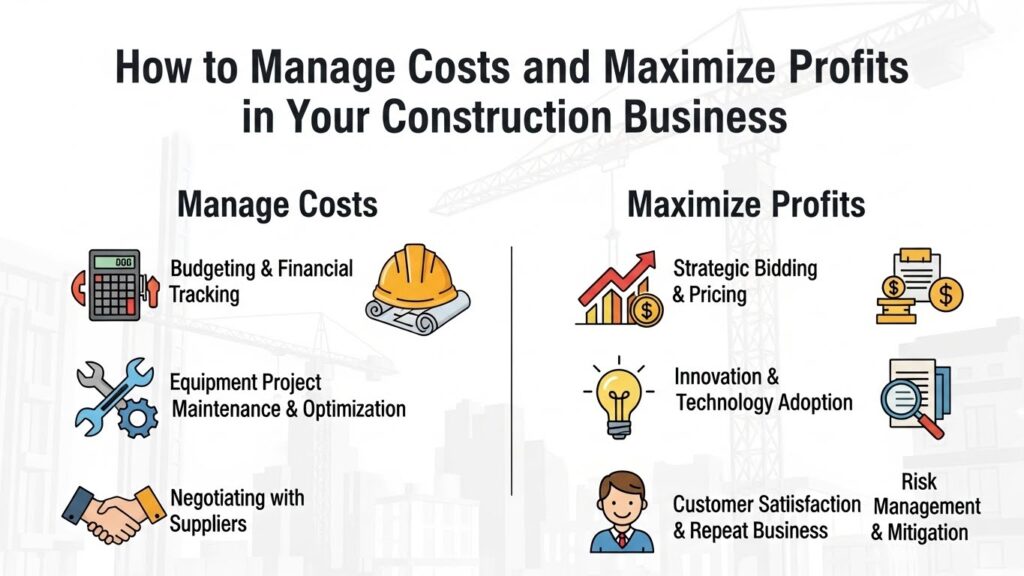
In the construction industry, success is built on more than just quality workmanship; it rests on a foundation of sound financial management. Profit margins can be thin, and unexpected costs can quickly turn a promising project into a financial loss. Mastering the art of cost control while identifying opportunities to maximize profit is essential for long-term stability and growth.
Effective financial management is not about cutting corners. Instead, it involves a strategic approach to planning, execution, and review. By implementing smart processes and leveraging the right tools, construction business owners can gain greater control over their bottom line and build a more resilient company. Let’s explore the key strategies for managing costs and boosting profitability.
Accurate Bidding and Estimating
The financial success of any project begins with the bid. An estimate that is too high may lose you the job, while one that is too low can guarantee a loss before work even starts. Precision at this stage is critical.
Detailed Cost Analysis
Your bids should be based on a thorough and detailed analysis of all potential costs. This includes direct costs like labor, materials, and equipment, as well as indirect costs such as project management, insurance, and administrative overhead. Use historical data from past projects to inform your estimates, adjusting for current market prices and project-specific complexities. The more granular your initial estimate, the fewer financial surprises you will encounter down the road.
Incorporating Contingencies
No construction project goes exactly as planned. Weather delays, supply chain issues, and unforeseen site conditions are common challenges. A smart bid includes a contingency fund to cover these unexpected expenses. This buffer protects your profit margin from being eroded by circumstances outside of your control. A standard practice is to add a percentage of the total project cost as a contingency, based on the project’s complexity and risk level.
Proactive Project and Financial Management
Once a project is underway, continuous monitoring and management are necessary to keep costs in check. A hands-off approach can lead to budget overruns and schedule delays.
Tracking Job Costs in Real-Time
It is vital to have a system for tracking expenses as they occur. This allows you to compare actual spending against your budget in real-time. By monitoring labor hours, material purchases, and subcontractor payments, you can quickly identify areas where you are overspending. This early detection gives you the opportunity to make adjustments before the problem spirals. Modern software solutions can simplify this process, providing instant visibility into a project’s financial health.
Optimizing Subcontractor Bids
Managing bids from subcontractors can be a time-consuming but crucial part of cost control. A well-organized system for collecting and comparing these bids ensures you get competitive pricing without sacrificing quality. Tools that streamline this process can be invaluable. For example, using a platform like the Biddi app allows for efficient collection and comparison of subcontractor proposals, helping you make informed decisions quickly.
Enhancing Efficiency on the Job Site
Operational efficiency directly impacts your bottom line. Wasted time, materials, and labor are all drains on profitability.
Improving Labor Productivity
Your crew is one of your most valuable assets and often one of your biggest expenses. Ensuring they can work efficiently is key. This involves clear communication through daily meetings, providing the right tools and equipment for the job, and ensuring a safe working environment to minimize downtime due to accidents. Proper project scheduling also plays a huge role, preventing situations where workers are waiting for materials or for another trade to finish their task.
Smart Material Management
Effective management of materials can significantly reduce costs. This means ordering the right quantities to avoid waste, ensuring timely delivery to prevent work stoppages, and properly securing materials on-site to prevent theft or damage. Developing strong relationships with suppliers can also lead to better pricing and more reliable service.
By focusing on accurate estimating, proactive management, and on-site efficiency, you can take firm control of your construction business’s finances. These strategies not only help in managing costs but also lay the groundwork for maximizing profits, ensuring your company thrives in a competitive market.