
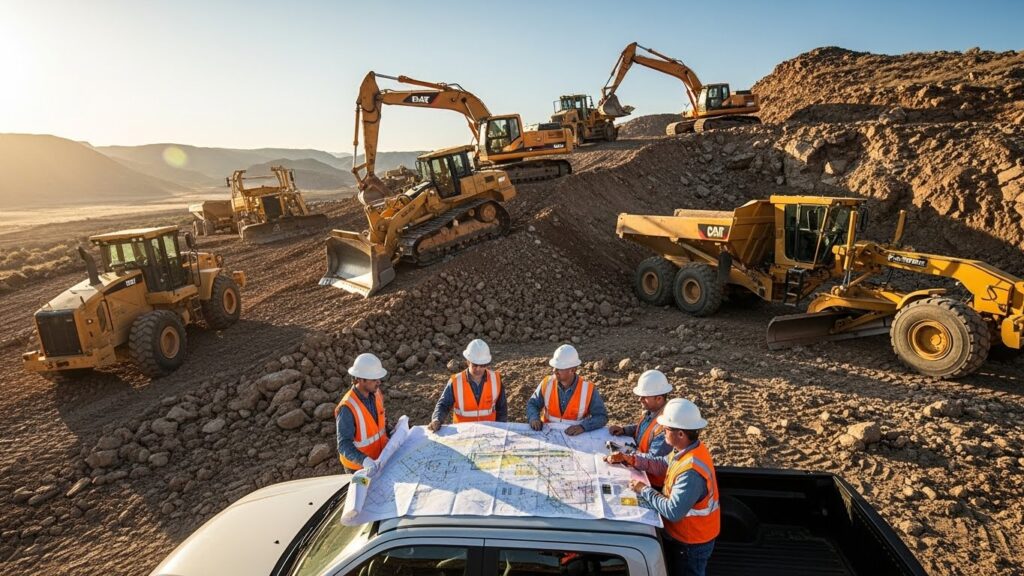
Operating on challenging terrain such as steep hillsides, soft soil, or rocky ground presents unique obstacles. The success, safety, and efficiency of a project in these environments depend heavily on selecting the right heavy equipment. Standard machinery may not have the power, stability, or maneuverability to perform effectively, making a careful selection process essential.
Choosing the correct machine involves more than just looking at its primary function. It requires a detailed analysis of the terrain, project scope, and equipment specifications. This guide covers the key factors to consider when selecting heavy equipment for work in demanding environments.
Evaluate the Terrain and Ground Conditions
The first and most critical step is to conduct a thorough assessment of the job site. The specific characteristics of the landscape will dictate which type of machinery is suitable.
Soil Type and Stability
The composition of the ground is a primary concern. Soft, muddy, or sandy soils require equipment with excellent flotation and low ground pressure to avoid sinking. Machines with tracks, such as compact track loaders or crawler dozers, distribute weight more evenly than wheeled equipment, making them ideal for these conditions. Conversely, hard, rocky surfaces demand durable tires or robust undercarriages that can withstand abrasion and potential punctures.
Slope and Grade
Working on slopes introduces significant stability challenges. You need equipment with a low center of gravity and excellent traction to operate safely and effectively. Four-wheel-drive articulated trucks, for example, are designed to navigate steep grades while carrying heavy loads. Always check the manufacturer’s specifications for the maximum operating grade of any machine you are considering.
Match the Equipment to the Task
Once you understand the terrain, you can narrow down your options based on the specific jobs that need to be done.
Earthmoving and Excavation
For digging and moving large quantities of material in rough terrain, tracked excavators and dozers are often the best choice. Their stability and power allow them to handle uneven ground with ease. For smaller-scale excavation or work in tighter spaces, a mini excavator on tracks provides versatility without sacrificing stability.
Lifting and Material Handling
Lifting heavy materials on an uneven site requires specialized equipment. A rough-terrain crane is designed with a robust undercarriage and oversized tires to provide a stable lifting platform on undeveloped sites. For projects requiring vertical lifting capabilities in difficult locations, you might consult a specialized provider. For instance, a crane rental service in Utah would be able to recommend the appropriate crane type for mountainous or rocky job sites common to the region.
Key Machine Specifications to Consider
Beyond the type of machine, specific features and specifications play a vital role in performance on challenging landscapes.
Tracks vs. Wheels
The choice between tracks and wheels is fundamental. Tracks offer superior traction, stability, and flotation on soft or uneven surfaces. Wheeled equipment, on the other hand, provides greater speed and mobility on firmer ground and is less likely to damage paved surfaces. For sites with mixed conditions, some machines offer interchangeable or hybrid options.
Power and Engine Performance
Challenging terrains demand more from a machine’s engine. Look for equipment with sufficient horsepower and torque to handle steep inclines and heavy loads without straining the engine. Consider factors like altitude, as performance can decrease in higher elevations. Modern engines with advanced electronic controls can often adapt to these changing conditions more effectively.
Safety and Operator Comfort
Safety is paramount in any operation, but especially in difficult environments. Look for machines with certified Rollover Protective Structures (ROPS) and Falling Object Protective Structures (FOPS). Features like advanced visibility systems, rearview cameras, and ergonomic controls reduce operator fatigue and improve situational awareness, contributing to a safer work site.
Making the right choice of heavy equipment for a challenging landscape is a strategic decision that impacts every aspect of your project. By carefully analyzing the site conditions, matching the machine to the task, and paying close attention to key specifications, you can ensure your project proceeds safely, efficiently, and successfully.