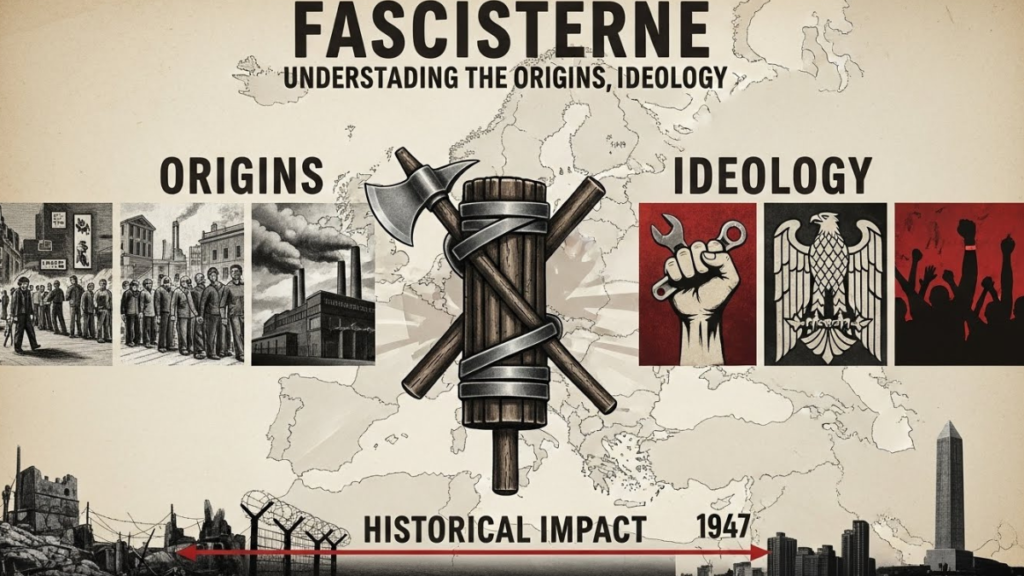
The term fascisterne is commonly used to describe groups or individuals associated with fascist ideology, particularly in a historical and political context. Emerging in early twentieth-century Europe, fascisterne became linked with authoritarian governance, intense nationalism, and rigid social control. Understanding fascisterne requires examining their origins, core beliefs, and long-lasting influence on political systems and societies across the world.
What Does Fascisterne Mean in Historical Context?
The word fascisterne originates from the broader concept of fascism, a political ideology that gained prominence during periods of economic instability and social unrest. Fascisterne were typically organized movements or supporters who believed in strong centralized authority, national unity, and strict control over political opposition.
Historically, fascisterne positioned themselves as a response to perceived weaknesses in democratic systems. By promising order, strength, and national revival, they attracted followers during times of uncertainty and crisis.
The Ideological Foundations of Fascisterne
Nationalism and Identity in Fascisterne
One of the defining elements of fasci-sterne ideology is extreme nationalism. Fascisterne often emphasized a singular national identity, placing it above individual freedoms or diverse cultural expressions. This belief system promoted loyalty to the state and portrayed dissent as a threat to national unity.
By reinforcing a strong sense of collective identity, fasci-sterne sought to mobilize populations under a unified political vision.
Authority and Leadership Among Fascisterne
Another key feature of fasci-sterne movements was the emphasis on authoritarian leadership. Fasci-sterne typically rejected pluralism and democratic debate, favoring centralized power under a strong leader. This structure allowed for rapid decision-making but often resulted in the suppression of civil liberties.
The focus on authority shaped how fasci-sterne governed and interacted with society.
The Rise of Fascisterne in Europe
Social Conditions That Enabled Fascisterne
The growth of fasci-sterne in Europe was closely linked to social and economic challenges. Post-war instability, unemployment, and dissatisfaction with existing political systems created conditions in which fasci-sterne gained support. By presenting themselves as solutions to chaos, they capitalized on public fear and frustration.
These conditions demonstrate how political movements can gain traction during times of widespread uncertainty.
Political Strategies Used by Fascisterne
Fasci-sterne relied heavily on propaganda, symbolism, and mass rallies to spread their message. Carefully crafted narratives portrayed fasci-sterne as protectors of national values and stability. This strategic communication helped consolidate power and marginalize opposition.
Such methods highlight the importance of media and messaging in political movements.
Fascisterne and Their Impact on Society
Social Control and Cultural Influence of Fascisterne
Once in power, fasci-sterne often implemented strict social controls. Education, media, and cultural institutions were reshaped to reflect official ideology. By influencing these areas, fasci-sterne aimed to reinforce loyalty and limit alternative viewpoints.
This level of control had long-term effects on cultural expression and intellectual freedom.
Economic Policies Under Fascisterne
Economic approaches adopted by fasci-sterne typically emphasized state involvement and national self-sufficiency. While private ownership sometimes remained, industries were often directed toward national goals. This system sought to reduce dependency on external influences and strengthen domestic production.
The economic legacy of fasci-sterne remains a topic of historical debate and analysis.
The Decline and Legacy of Fascisterne
Factors Leading to the Fall of Fascisterne
Over time, authoritarian practices and aggressive policies led to instability and loss of support. External pressures also played a significant role in weakening fasci-sterne regimes.
These factors illustrate how rigid political systems struggle to sustain long-term stability.
Lessons Learned from Fascisterne
The history of fasci-sterne provides important lessons about governance, power, and civil liberties. It highlights the risks associated with unchecked authority and the erosion of democratic institutions. Studying fasci-sterne helps modern societies recognize warning signs and protect democratic values.
This historical awareness remains relevant in contemporary political discussions.
Fascisterne in Modern Discourse
Academic and Educational Perspectives on Fascisterne
Today, fasci-sterne are primarily studied in academic and historical contexts. Scholars analyze their ideology, methods, and consequences to better understand how such movements emerge.
Such analysis supports informed civic engagement and political literacy.
Cultural Representations of Fascisterne
The influence of fasci-sterne can also be seen in literature, film, and art. These representations often explore themes of power, resistance, and moral responsibility. By examining fasci-sterne through cultural lenses, societies continue to reflect on their historical significance.
Cultural narratives help preserve collective memory and encourage dialogue.
Conclusion
The study of fasci-sterne remains important for understanding how political ideologies shape societies. By examining their origins, beliefs, and consequences, it becomes possible to recognize the conditions that allow such movements to arise. Fasci-sterne serve as a reminder of the importance of democratic principles, open dialogue, and respect for individual rights.
Through careful historical analysis, societies can learn from the past and work toward more inclusive and resilient political systems.